By Richardson Community Staff
Published October 6, 2026
The Door Is Open
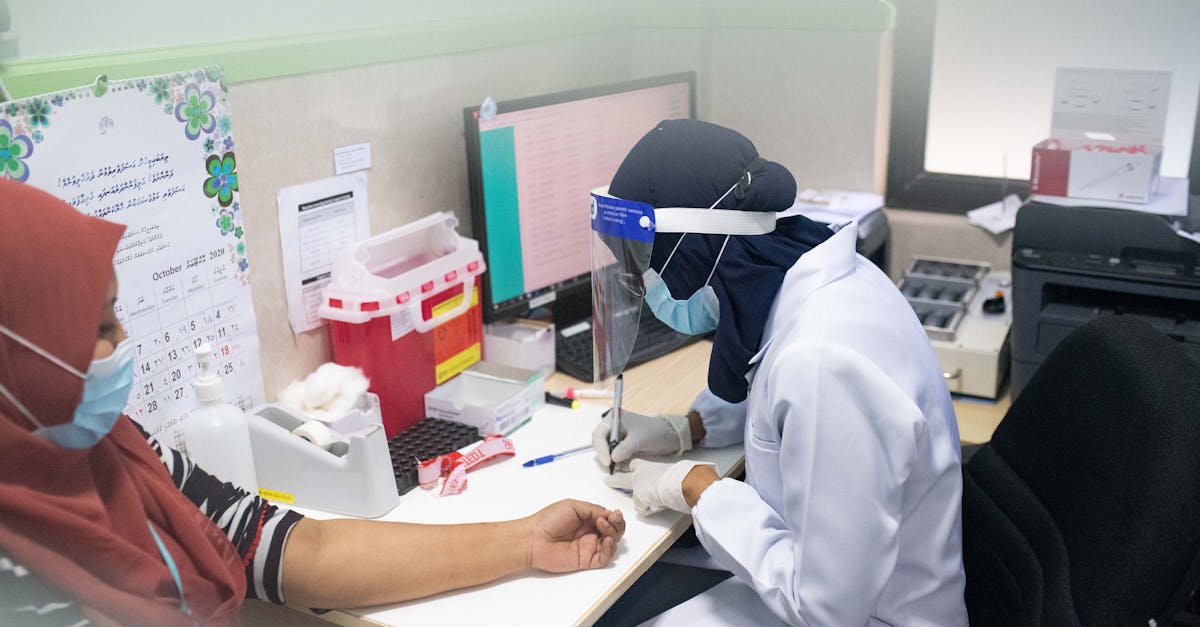
Thurgood Marshall Student Success Academy has always occupied a particular place in Richardson ISD’s constellation of campuses — a school designed around students who benefit from a more specialized, supportive environment. This fall, that environment got a meaningful addition. A new health clinic, the product of a partnership between RISD and Metrocare Services, has opened its doors inside the building, bringing medical and behavioral health support to students without requiring a single family to arrange a separate appointment across town.
The Metrocare Empower Clinic at Thurgood Marshall Student Success Academy represents one of the quieter but more substantive investments Richardson has made in its young people in recent years. It is the kind of program that does not generate a parade, but the kind that changes the texture of a school day for children who otherwise might go without care.
What School-Based Health Clinics Actually Do
For families already familiar with school-based health centers, the model is straightforward: students can access health services during the school day, without the friction of scheduling, transportation, or missed work that comes with off-campus appointments. For families encountering this model for the first time, the scope can be surprising.
Metrocare, the Dallas-area nonprofit that operates the clinic, has built its reputation over decades on behavioral and mental health services. The organization works across North Texas serving people at all ages, with a particular focus on underserved communities. Its Empower Clinic model is designed specifically for school settings, meeting students where they spend most of their waking hours.
At Thurgood Marshall, that means students have a resource on campus that the school’s mission has long pointed toward but that required a formal institutional partnership to realize. The grand opening, celebrated by Richardson ISD this fall, marked the moment that resource became operational.
Why Thurgood Marshall, and Why Now
Thurgood Marshall Student Success Academy is not a traditional neighborhood elementary or middle school. It serves students across Richardson ISD who require an alternative setting — one built around more intensive academic and social-emotional support. The student population there often arrives carrying circumstances that make health access both more critical and more difficult to navigate independently.
Placing a clinic at this campus rather than, say, a larger comprehensive high school is a deliberate choice. It reflects an understanding that the students who most need a lower barrier to care are precisely the students least likely to get it through conventional means. When a child can walk down a hallway to see a health professional rather than wait for a parent to arrange an outside appointment — an appointment that may never materialize — the probability of that child actually receiving care rises substantially.
The timing, too, is not accidental. Richardson ISD has been in an active period of expanding student support services. The district recently earned a B rating from the Texas Education Agency’s 2026 accountability cycle, with 31 campuses earning A or B designations — a reflection of documented student progress. That progress does not happen in isolation from students’ physical and mental wellbeing. Educators have understood for years what researchers have confirmed repeatedly: children who are healthy attend school more consistently, concentrate more effectively, and are far more likely to benefit from the instruction happening around them.
The Partnership Model
Partnerships between school districts and community health organizations are not new in Texas, but they remain far from universal. They require sustained coordination between institutions that operate on different timelines, answer to different governing bodies, and measure success differently. For RISD and Metrocare, the Thurgood Marshall clinic represents the kind of civic collaboration that Richardson has increasingly pursued as it works to address needs that no single institution can meet alone.
Metrocare brings clinical expertise, licensing, and an existing network of services. RISD brings space, student relationships, and the daily infrastructure of a school that families already trust. The combination produces something neither could build independently.
For parents, the practical implications are significant. Rather than navigating a referral process, finding transportation, and taking time off work, a family can know that their child has access to support within the building where that child spends six or seven hours a day. The clinic does not replace outside providers or emergency services, but it fills a gap that for many families was simply empty before.
What It Means for Richardson Broadly
Richardson is a city that tends to take quiet pride in its institutions — its parks, its symphony, its long-running arts traditions, its school district. The Metrocare Empower Clinic at Thurgood Marshall does not announce itself the way a festival or a performing arts season does, but it belongs in the same conversation about what kind of community Richardson is choosing to be.
School-based health clinics have a documented track record of reducing chronic absenteeism, catching untreated conditions before they escalate, and extending behavioral health support to students who would otherwise go unserved. In a district where tens of thousands of students move through dozens of campuses every day, a single clinic at a single specialized school is a modest start — but starts matter, and the model, once established, tends to expand.
A Note for Families
Families whose children attend Thurgood Marshall Student Success Academy are encouraged to connect with the school directly about how to access the Metrocare Empower Clinic’s services and what documentation or enrollment steps, if any, are involved. Metrocare’s broader network of services is also available to community members beyond the school setting.
For Richardson as a whole, the opening is a signal worth noticing. In a fall season full of festivals and performances and ribbon-cuttings, this particular door opening inside a school on the east side of the city may end up mattering more than most.
Topics in this article
Never miss a bite.
Subscribe to the Richardson newsletter for weekly local news and reviews.


